The Naked Gun is a return to the kind of goofy, absurdist humor not much seen outside the films written and/or directed by Jerry Zucker, Jim Abrahams, and David Zucker, collectively known as ZAZ. As was the case with all their films from The Kentucky Fried Movie to Airplane! to Hot Shots! – and, of course, the original Naked Gun franchise that started with the short-lived TV series Police Squad! and continued in spinoff films released between 1988 and ‘94 – the film is a wall to wall series of inane, over-the-top verbal and physical gags. There is a plot, but it’s entirely inconsequential; what director Akiva Shaffer really wants the audience to focus on is the comedy, and not the witty or sophisticated kind. It’s intentionally obvious and unapologetically lowbrow, just as the ZAZ team would have wanted it.
The film is, technically speaking, not a remake of The Naked Gun: From the Files of Police Squad!, but a legacy sequel. Liam Neeson, in a transparent parody of his more recent I’m-older-but-I’ve-still-got-it action roles, plays Det. Frank Drebin Jr. Like his father, four times portrayed by Leslie Nielsen, he works for Police Squad, a special and redundantly-named unit of the LAPD. An intense, hardened man often at odds with his superior (CCH Pounder) for his Harry Callahan approach to police work, he simultaneously wants to be just like his father and stand on his own. No doubt Shaffer had the same feelings about the movie he was making. Anyway, into Drebin’s life enters sultry crime novelist Beth Davenport (Pamela Anderson), who insists her brother didn’t commit vehicular suicide but was murdered.
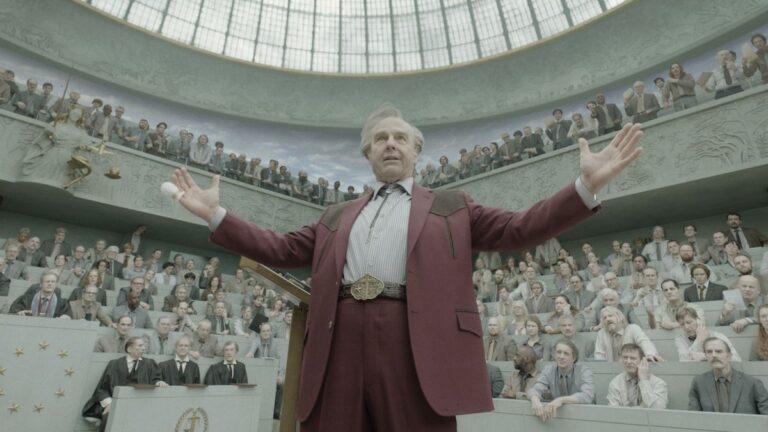
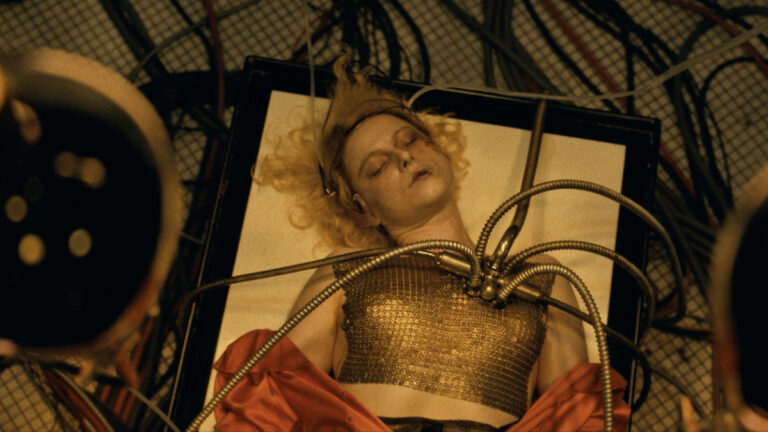
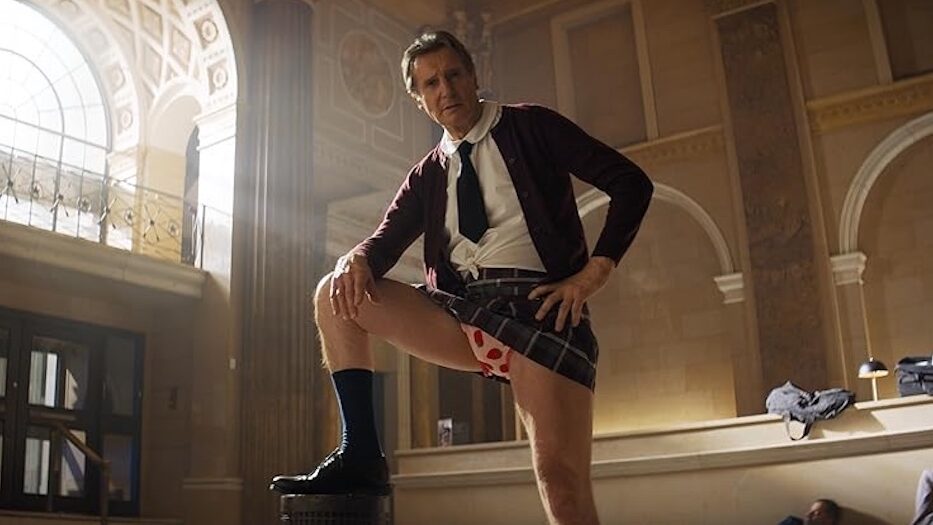
Drebin’s investigation leads him to criminal tech billionaire Richard Crane (Danny Huston), who has a removable scar on his cheek and has overseen the creation of self-driving electric cars and testosterone boosters that have men standing pantsless in front of a red-light machine. Importantly to the plot, there’s also the aptly named P.L.O.T. Device, a handheld rectangular box that reduces brain functioning to base animal instincts. Crane’s evil scheme: Unleash a mind scrambling pulse during a large public gathering and allow society to plunge into a Darwinian hellscape. Once the weaklings are killed and established governments fall, Crane and his minions can emerge from their underground compound – where, as one would expect, “Weird Al” Yankovic will provide live entertainment – and become the forefathers of a new era in human history.
Ludicrous, you may say. But have you forgotten what kind of movie this is? It’s not as if the plot matters, anyway; it’s all about the jokes and how many can be crammed into one scene. My favorite was a recurring gag of Drebin and his partner – Ed Hocken Jr. (Paul Walter Hauser), the son of the character George Kennedy played in the first three films – being given to-go cups of coffee everywhere they show up, sometimes by anonymous pairs of hands, in one case impossibly while Drebin is driving. It doesn’t even matter if they already have coffee; both men will throw their half-empty cups away and take new ones. There’s also a montage of Drebin and Beth, now lovers, spending the weekend at a ski resort, where they use witchcraft to bring a snowman to life and involve him in a PG-13-appropriate threesome. Even with Starship’s “Nothing’s Gonna Stop Us Now” playing on the soundtrack, the snowman will still turn murderous after feeling rejected.
Is that tasteless? No more so than a shot in the original film of Nielsen and Prescilla Presley making love while wearing ridiculous body-sized condoms. Still, if that crosses a line with you, there are milder gags, like when Drebin asks Beth to take a chair, to which she responds, “No thanks. I have plenty at my house.” Or when Crane offers Drebin a cigar by asking, “Cigar?” and Drebin replies, “Looks like one to me.” Or when Drebin says, “UCLA,” and Beth says that she sees L.A. every day, because she lives there. Of course those jokes are all obvious. That’s their appeal. It helps that Neeson and Anderson, both known to the Academy, play their roles straight. The same acting method was used by Nielsen and Presley – the latter, incidentally, treated to a cameo appearance in this new film.
One can make an argument against a joke that addresses the casting of the late O.J. Simpson in the first three films. Then again, how was the general public to know that the rest of his life would be shrouded in the worst kind of infamy? To an extent, the same can be said about Bill Cosby, also the butt of one of the film’s riskier jokes. This could perhaps be the handiwork of producer Seth MacFarlane, whose adult animated sitcom Family Guy has never shied away from controversial humor and taboo subject matter. Still, be it through the filmmakers’ restraint, strategic editing, or both, The Naked Gun doesn’t go all that far. It’s silly, escapist, and nostalgic more than anything else – the kind of film the ZAZ team, its fans, and audiences in general will likely have a great deal of fun watching.