Much like an act of terrorism, One Battle After Another is a film that, for better or worse, is intended to provoke a reaction. Writer/director Paul Thomas Anderson, an established narrative risk taker, intentionally and without apology tackles political subjects that make people’s blood boil, be they on the side of righteous causes or of fear, hatred, and prejudice. It’s a film that comes at just the right time for a country on the brink. Make no mistake, the United States is on the brink. Ideological divides are greater than they have been in a very long time. Democracy has never been more fragile. Political violence is once again bubbling to the surface – and not everyone believes that that’s a bad thing.
Anderson has once again adapted a Thomas Pynchon novel, Vineland in this case. Having not read it, I don’t claim to know whether or not the film is faithful, narratively or politically. What I can say is that there’s a certain literary quirkiness to the plot and characters; of course the protagonist is a revolutionary, and of course his mission to rescue his kidnapped daughter is complicated not just by his own shortcomings but also by the chaos of a world gone mad. Of course the villain is a white supremicist whose high-ranking military status is second only to his secret lust for black women. None of this makes the film a comedy, but it does allow for a couple of very funny scenes. Anderson is nothing if not adept at capturing what authors are generally able to do better than screenwriters, namely finding humor in situations that are anything but humorous.
The revolutionary goes by a few different aliases, but we mostly know him as Bob Ferguson (Leonardo DiCaprio). He’s an explosives expert for the French 75, a far-left terrorist group whose anarchic activities include bombing government offices, destroying power grids, and liberating undocumented migrants from detention centers. Sixteen years ago, he fell in love with one of his comrades, codenamed Perfidia Beverly Hills (Teyana Taylor). It’s debatable if she also fell in love with him. I would say she was more in love with the sexual thrills she got from him, and indeed from the danger inherent in her group’s mission. Feeling sexually deprived and unwilling to settle with Bob into a domestic life, she leaves after giving birth to a daughter.
After a series of events too complicated and narratively important to give away, we flash forward to the present day, at which point a caring but pot-addicted and paranoid Bob lives in hiding in a Colorado sanctuary city with his now teenage daughter, known primarily as Willa (Chase Infiniti). Their shakily peaceful existence comes to an end at the hands of military colonel Steven Lockjaw (Sean Penn), who launches an immigration raid but is on the hunt for something other than migrant workers. No, I won’t say more than that. Willa must go on the run with another French 75 comrade (Regina Hall), while Bob joins forces with a martial arts instructor (Benicio del Toro) who doubles as the leader of an Underground Railroad-type movement for undocumented citizens.
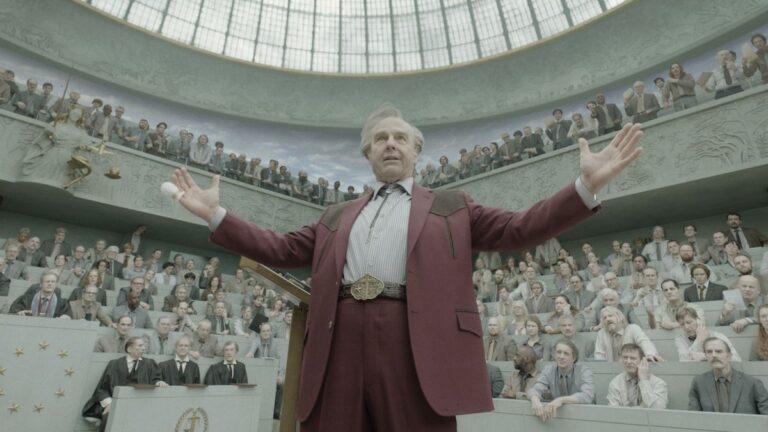
While the entire cast is stellar, Sean Penn gives a performance that will likely be rewarded, or at the very least acknowledged, come the awards season. The line between a campy stereotype and a terrifying menace is very fine indeed, and yet he walks it with the balance of a high-wire artist. We see the campier side not just in scenes showing Lockjaw’s kinky sexual proclivities but also where he’s being interviewed by the members of a secretive Christmas-themed white supremicist group, who would be absurd were they not so powerful and disgusting. The heavier, frightening side is most apparent in a scene between Lockjaw and Willa in the chapel of a Southwestern convent, the home of a radicalized order of nuns; his predatory glances and frequent mouth tics convey his hatred and racism far more than his words.
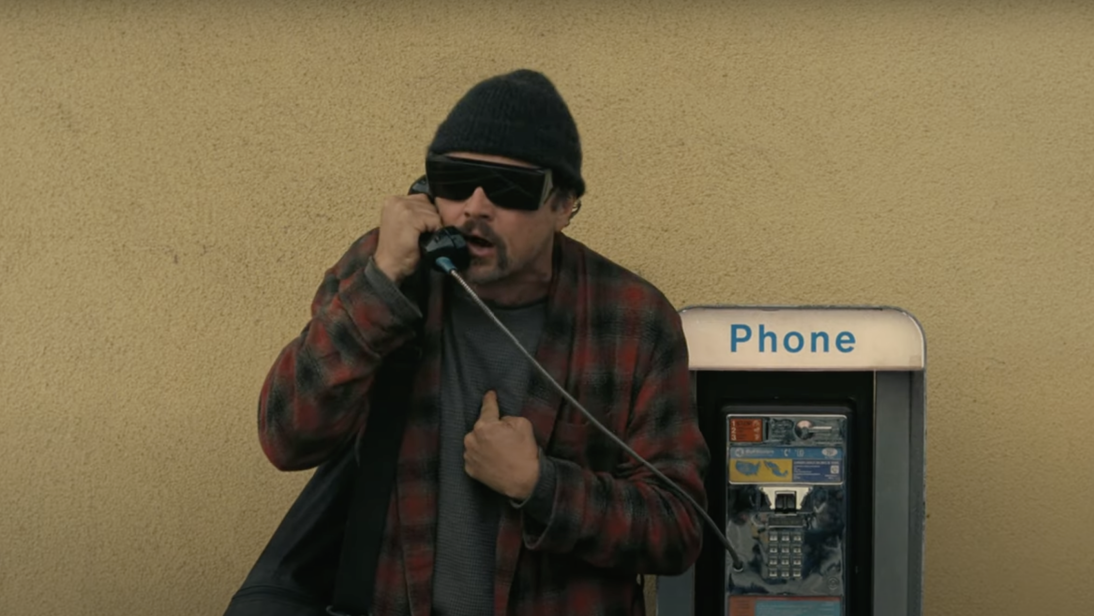
I did find myself questioning the final act, during which overkill and unconvincing sentimentality undermine the tone Anderson worked so hard to create. Only a few small edits would have fixed the problem. Nitpicking aside, One Battle After Another is among one of 2025’s better films. Aside from some instances of odd humor, including a hilarious phone conversation that likens forgetting your code words to talking with an especially difficult customer service representative, the film shows that America’s history of social and political battles is just as unending as that of the characters’. If it’s not racism, it’s xenophobia. If it’s not capitalism, it’s fascism. If it’s not terrorism, it’s border control. Will we ever live in a time where we’re not troubled by something? It’s always one battle after another.