Wildwood
2026
Laika’s Wildwood, a stop-motion animated fairy tale, is the latest example of a mainstream fantasy film unsuitable for young children. It earns every bit of its PG-13 rating, not just because of mature themes, a few mild swear words, and some frightening images, but also because of a climactic battle sequence that doesn’t spare the audience violence, death, blood, and maiming. I’m always the first to defend, or at least be aware of, family-geared fantasy movies that don’t shy away from the darker side of the imagination; my typical response is to state my belief that children can generally handle more than many adults give them credit for, and that parents obviously know their children better than I do and therefore must rely on their own judgment. The thing is, this isn’t a family-geared fantasy. It’s a grown-up movie that happens to be animated.
This may explain why I merely liked the film instead of loved it. If catering to young children was never the intention, if darkness and hard life lessons were always the goal, why bother appealing to a wider audience with a middle-of-the-road rating? Why not go all out and make an R-rated animated movie, like Ralph Bakshi or anyone who made Heavy Metal? The swear words can be stronger. The frightening images can be more intense. Most of all, the violence can be on par with modern-day war movies, where the point is to show how brutal, gruesome, and tragic armed combat really is. From that standpoint, the director of Wildwood, Travis Knight, plays it safe. To be fair, I’ve only seen the movie; I haven’t read Colin Meloy’s novel, so I obviously don’t know if I’m criticizing narrative mistakes made by the filmmakers alone.
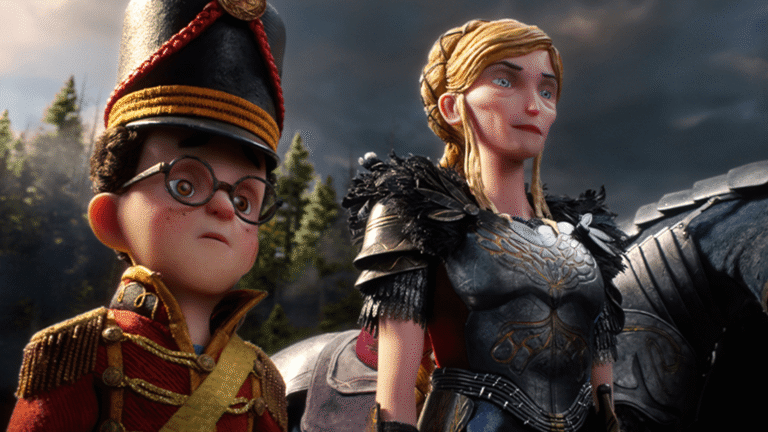
What’s not in dispute is that, like all Laika films, Wildwood is a triumph of art direction and animation. The latter is noteworthy, because advancements in computer technology have allowed for the smoothest, most lifelike stop-motion effects I’ve yet seen. There’s hardly a trace of jerkiness in the characters’ body movements. There are absolutely no shots revealing where an animator’s hands had been, as was the case in films like the original King Kong, or anything in which Ray Harryhausen supervised the special effects. That may come as a disappointment to those nostalgic for the pre-digital days of stop motion. Indeed, those shabbier techniques do have their place, and in the right context can be delightfully campy. In the context of Laika, Wildwood especially, it would have been fatal.
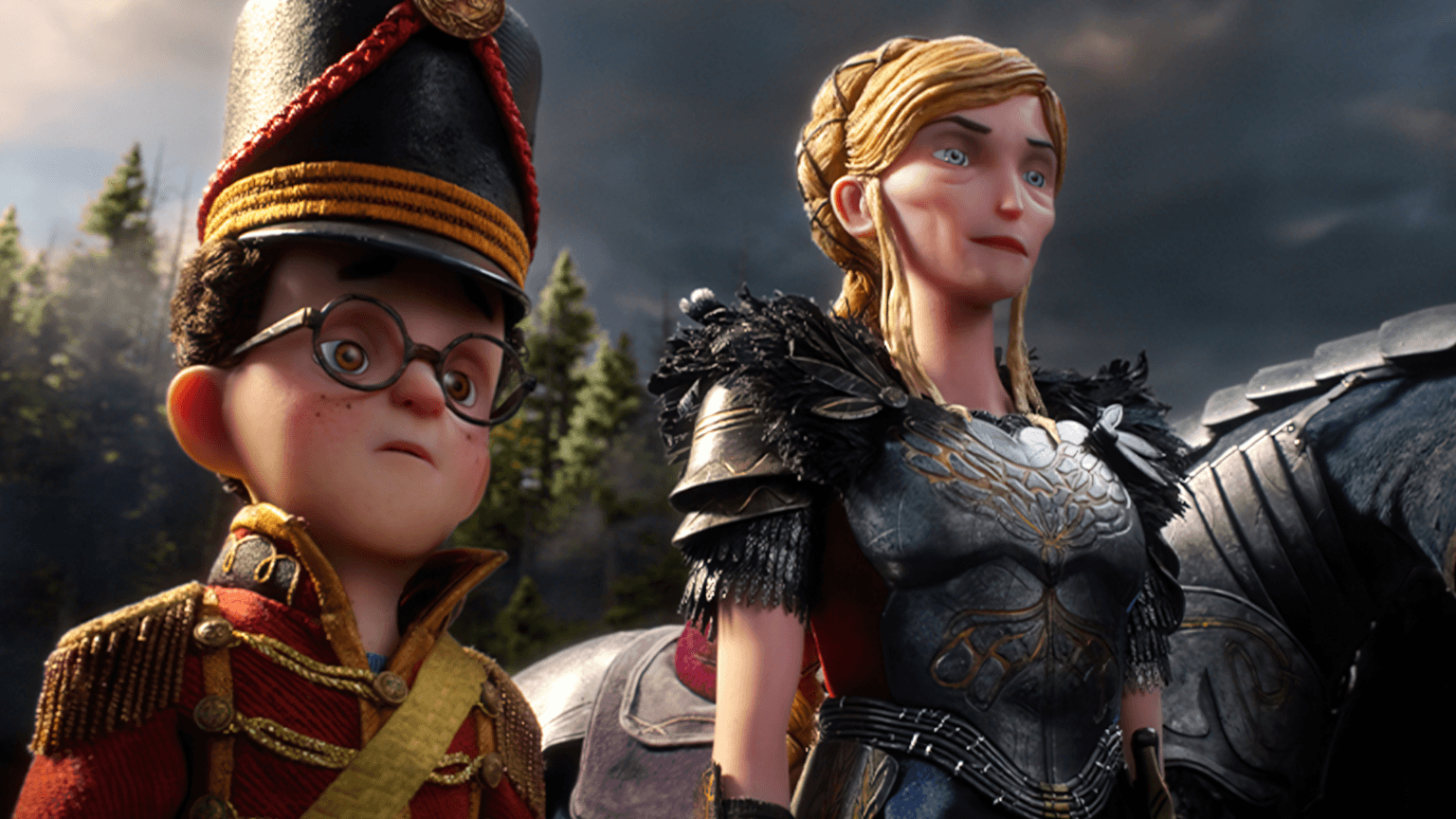
Although bits are taken from Western folklore, indigenous mysticism, and pantheistic concepts of nature, the film is surprisingly unoriginal in plot and theme. It tells the story of Prue McKeel (voiced by Peyton Elizabeth Lee), an adolescent girl whose rational beliefs are challenged when she ventures into a magical forest just outside her Portland, Oregon home. Somewhat similarly to Jennifer Connelly in Labyrinth, she’s on a mission to rescue her beloved infant brother Mac, who was kidnapped by a gigantic murder of crows. On her journey, she encounters a wide variety of side characters, both good and bad, from birds to farm animals to wise elders to displaced warrior tribes. At times, she even has a sidekick: The obligatory socially inept nerd (voiced by Jacob Tremblay) she initially could only tolerate. The antagonist is Alexandra (voiced by Carrey Mulligan), a once benevolent dowager governess made evil by grief over the death of her son.
The story not only takes place in Portland – where, perhaps not coincidentally, Laika is headquartered – but openly embraces the city’s reputation as a left-wing haven for artists and colorful personalities in general. Prue’s parents (voiced by Maya Erskine and Jake Johnson) are the flawed but lovable epitomes of the Portland stereotype, from their knitted sweaters and beanies to their opposition to Western medicine. The film overall will irk anyone who has bought into the idea that wokeism is a bad thing; both the cast and the characters are racially diverse, and there are brief but noticeable shots of two couples, one interracial, the other same-sex. And when Prue inquires about what her overprotective parents will do when Mac gets married, her father replies that if he meets someone, “she/he/they can live with us!”
Personal politics notwithstanding, there’s absolutely no question that the film is inappropriate for younger children. Usually, such a statement hinges on subjective opinions on what is and is not too scary. In this case, scariness is but a small part of the argument; the depicted violence, especially during the final battle, is conspicuously beyond what the developing psychology of a child can handle. This is before factoring in the anthropomorphized animal characters, even the evil ones. In my opinion, the youngest appropriate age for Wildwood would be eleven or twelve, at which point children in general begin to outgrow their naivete. As for adult audiences – those outside of the MAGAsphere, at any rate – most should find it well made and entertaining, but also a bit formulaic and predictable. If nothing else, they can look forward to Laika’s trademark of revealing the animation process of their films during the end credits.