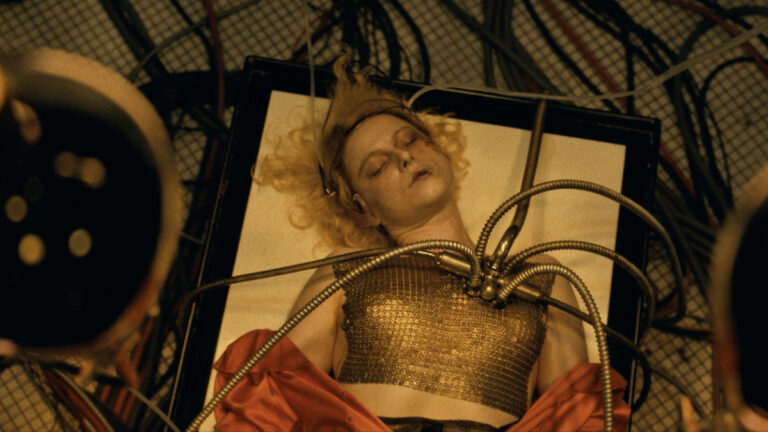
The Bride! (2026)

Maggie Gyllenhaal’s The Bride! is the most audacious and refreshing twist on the Frankenstein legend since Poor Things. It’s a wild, rebellious scream against male domination, which, the film argues, is the only thing more monstrous than resurrecting a corpse through unethical science. This isn’t to suggest that the film is philogynist; it’s a pointed statement about what patriarchy has historically allowed bad men to get away with. The film is essentially a revisionist version of James Whale’s 1935 classic The Bride of Frankenstein, which may have been a poignant study of Boris Karloff’s Creature but most certainly wasn’t a feminist film. The title character doesn’t even make an appearance until the final five minutes, and even then, only at the insistence of a very lonely Creature.
The Bride!, which takes place in 1936, doesn’t downplay the loneliness of the Creature (Christian Bale), who mostly goes by Frank. Anyone who has endured nearly 120 years of prejudice, hatred, and rejection would naturally feel lonely. But two things can be true at once; although at heart a loving soul starved of a meaningful connection to someone who understands, it’s simultaneously argued that his need for a reanimated female mate was primarily about relieving his own suffering. Much like us with being born, the dead woman (Jessie Buckley) never asked to be resurrected in the laboratory of an unscrupulous yet romantic mad scientist (Annette Bening). It may or may not have been his protective nature motivating his lies about the dead woman’s now forgotten past. He also conveniently omits the fact that she was unearthed from a potter’s grave.
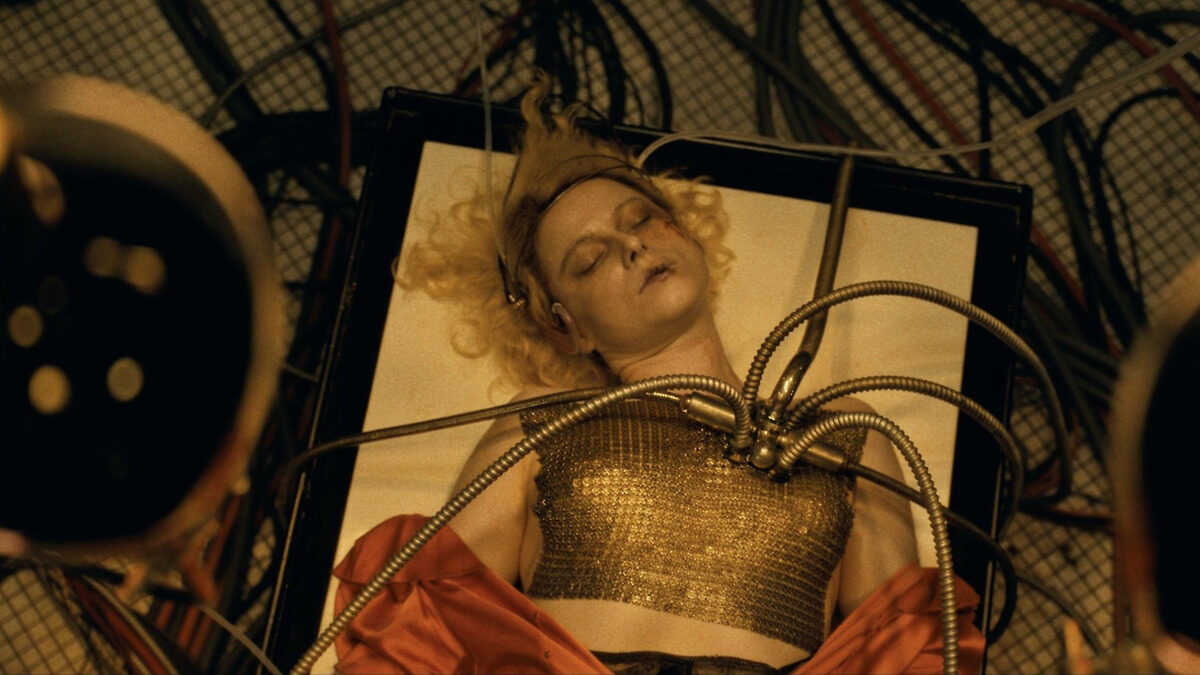
Before her death, she was Ida, a moll for a Chicago mob boss (Zlatko Burić) known for killing women and keeping their tongues as souvenirs. Not long before being fatally pushed down a flight of stairs, her mind is possessed by the spirit of Mary Shelley (also Buckley, in a nod to Elsa Lanchester’s 1935 double casting as the Bride and Shelley). The misogyny of the world, coupled with her physical inability to write a proper Frankenstein sequel, has twisted her feminist views into an uncontrollable rage. It manifests through the mentally fragile Ida, both before and after her resurrection, as a cross between a split-personality mental disorder and a libertine-like release of inhibitions. What a deliciously clever metafictional spin: Shelley is a pivotal character in a continuation of the very story she wrote in 1818.
Gyllenhaal, who also wrote the screenplay, is nothing if not adept at evoking complicated feelings for complicated characters. It was by design that we didn’t fully grasp Olivia Coleman’s character in Gyllenhaal’s own The Lost Daughter; Coleman played a woman who was clearly not meant to be a mother but could have conceivably been a wonderful aunt, in spite of her questionable behavior during a trip to Greece. It’s also by design in The Bride! that Ida is an emotional enigma. She deeply loves Frank but doesn’t appreciate relying on him for a backstory and a new name. Once on the run with Frank after a brutal self-defense killing, she inspires and becomes the figurehead of a violent feminist movement; while she understandably wants to take a stand against abuse and belittlement, she doesn’t necessarily want to take it to the extremes Shelley forces her to go in.
Detective Jake Wiles (Peter Sarsgaard), hot on Ida and Frank’s trail as they hop to and from states à la Bonnie and Clyde, is an equally tough nut to crack. On the one hand, he not only recognizes the superior sleuthing skills of his assistant Myrna Mallory (Penélope Cruz), he depends on them. On the other hand, he isn’t entirely above the sexism that holds women back; he refers to Myrna as his secretary, and when it comes to other cops, very much part of an all-boys’ club, he doesn’t go out of his way to dissuade their chauvinism. It’s not that he needs to be chivalrous. He needs to be part of the solution. In the real world, even with some progress made over the decades, women remain on unequal terms with men, and sadly will see something of themselves in Myrna – and perhaps in Ida.
Along with dialogue and character development, the film is a masterstroke of art direction, makeup effects, and performance. It’s also a love letter to cinema. The influences of Arthur Penn and James Whale are evident, the latter especially in the laboratory scenes. Furthermore, Frank escapes into the movies, especially those starring the Astaire-inspired Ronnie Reed (Jake Gyllenhaal). His escapism is almost literal; Frank projects himself onto the silver screen in Reed’s place, dancing elegantly in glorious black and white. And in what was obviously an homage to Mel Brooks’ Young Frankenstein, Ida and Frank crash a swanky party and dance monstrously to an instrumental rendition of “Puttin’ on the Ritz.” But it’s the feminist aspect that really makes The Bride! stand out. It’s more than a treatise on the historical mistreatment of women. It’s also an examination of the complex ways women have had to deal with it.