In 1974, the animated cartoon Journey Back to Oz tried and failed to continue the story of Dorothy Gale after her adventures in 1939’s The Wizard of Oz. Now we have Disney’s Return to Oz, the directorial debut of film and sound editor Walter Murch. It’s a new direct sequel that ignores the animated film, goes back to live-action moviemaking, and once again relies on L. Frank Baum’s original Oz books as its inspiration. This time, the results are far more successful. This isn’t to say that they’re perfect; there are aspects of the film that will likely give certain audiences pause. Fans of the original, for one, will likely be disappointed by the fact that it isn’t a musical. Of course, if more of them knew of the bland, forgettable songs featured in Journey Back to Oz, they may realize that it’s better to have no songs at all than bad ones.
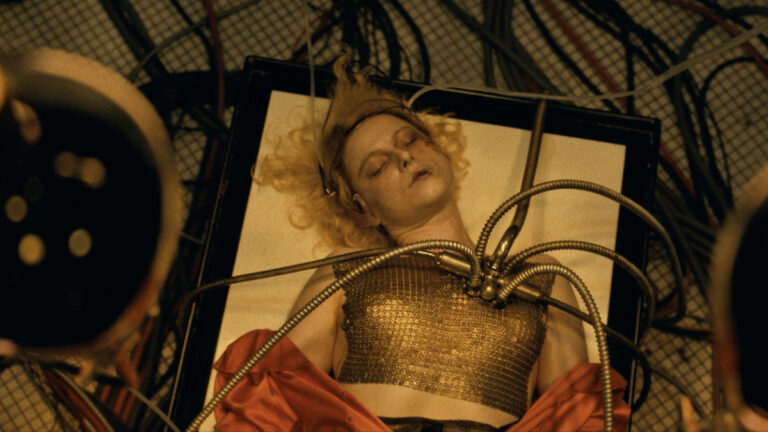
But that’s really the least of it. The film’s biggest issue is that it’s conspicuously darker in tone. I’m not saying that The Wizard of Oz was free of dark or scary scenes; the Wicked Witch of the West, played by Margaret Hamilton, frightened children for decades. Still, Return to Oz does have specific scenes and character quirks some parents will not want their children exposed to. The film begins, for example, with an escape from a sanitarium, where we can hear the screams of the mental patients locked in the cellar. When we’re in the land of Oz, one of the two antagonists shows off her ability to switch heads, not in a gruesome horror-movie way, but still in a way that’s unsettling. Her minions, who have wheels in place of hands and feet, laugh maniacally as they chase innocent characters into dark corners. And then there’s the other antagonist, who in the final act makes himself downright monstrous and intimidating.
Having said all that, you obviously know your children better than I do, and in general, I believe they’re better at coping with scary imagery than many adults give them credit for. Some, I’ve found, actually enjoy it. In regards to it being so tonally different from The Wizard of Oz, the tradeoff is that it’s truer to Baum’s vision, not just narratively but thematically and characteristically. Even the more superficial aspects, such as the look of the Emerald City, are closer to what was described in the original books than the 1939 film. Probably the most successful stylistic change was the wonderful casting of Fairuza Balk; being ten years old at the time of filming, she’s physically and emotionally more aligned with Baum’s vision of Dorothy Gale than Judy Garland, who was already sixteen when The Wizard of Oz was shot.
The plot is drawn from two of Baum’s books, The Marvelous Land of Oz and Ozma of Oz. We’re back in Kansas in October of 1899, six months after Dorothy’s adventures in a place somewhere over the rainbow. Her financially struggling Aunt Em (Piper Laurie) and Uncle Henry (Matt Clark), deeply concerned by the stories Dorothy tells about the land of Oz, which she insists are all true, arrange for her to receive electroshock therapy. A sudden storm kills the power at the sanitarium and, with help, Dorothy escapes – only to be swept down a river back to Oz, joined this time not by her dog Toto but her hen Billina (voiced by Denise Bryer). The once fantastical land is now in ruins and under the thumb of the Nome King, a chicken-fearing rock creature seen both as actor Nicol Williamson in makeup and as a work of Will Vinton’s claymation.
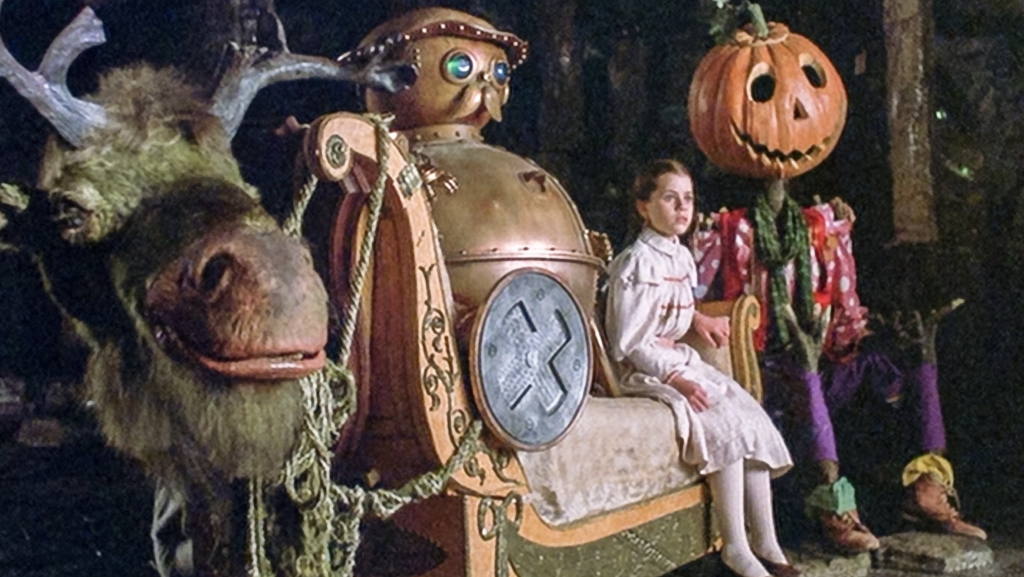
Dorothy’s journey to recuse Oz and its literally petrified citizens, which includes her old friends the Tin Woodsman and the Cowardly Lion, brings her to the Emerald City, where the current king, the Scarecrow, has been usurped by the evil witch Mombi (Jean Marsh), not a generic green-skinned hag as she was in Journey Back to Oz but a normal-looking woman in a bizarre yet elegant dress. To escape from her palace and reveal the secret hidden in the mirrors, Dorothy will need the help of new friends, all brought to life via an enchanting combination of costumes and puppetry. There’s Tik-Tok (performed by Michael Sundin and Tim Rose, voiced by Sean Barrett), a rotund copper automaton with wind-up features and designed to look like a World War I soldier. There’s Jack Pumpkinhead (performed by Stewart Larange, voiced by Brian Henson), a gentle bundle of clothed twigs with the head of a jack-o’-lantern. And then there’s Gump (performed by Steve Norrington, voiced by Lyle Conway), made with sofas, palm fronds, and the head of a moose, brought to life, as Jack was, with a life-giving powder.
As was the case in The Wizard of Oz, certain actors appearing in Oz also appear in the Kansas sequences. (“But it wasn’t a dream. It was a place. And you and you and you … and you were there!”) I won’t give anything away, but I think you’ll agree the choices of who appears in both lands are appropriate. What you may not agree with is the film’s darker tone. That’s understandable. Keep in mind that many beloved fairy tales – Hansel and Gretel, Snow White, Little Red Riding Hood, just to name a few – were told with the intent of scaring children while simultaneously teaching them difficult life lessons. Return to Oz has those sensibilities. It can’t be denied that some of today’s children, especially those under the age of six, will be frightened by the film. But as I said before, I believe children in general are quite resilient, and many of them may find the film a great deal of fun. Ultimately, only parents know for sure what their kids can and cannot handle.