Like the Batman and Spider-Man films of respective directors Tim Burton and Sam Raimi – along with Guillermo del Toro’s Hellboy, and even Ang Lee’s underrated Hulk – Fantastic Four is a prime example of the contemporary comic book adaptation: Amusingly preposterous, delightfully exaggerated in characterization, and a visually pleasing showcase of stunts and special effects. It’s a lot of fun. Having never been a comic book reader, I can’t say whether or not it’s faithful to the original Marvel comic by Stan Lee and Jack Kirby. Then again, as long as the end result is watchable and entertaining, an adaptation can be as unfaithful as Casanova for all I care. Fantastic Four is indeed both watchable and entertaining To hell with pesky little things like reality. We get that everyday for free, usually in unnecessary amounts.
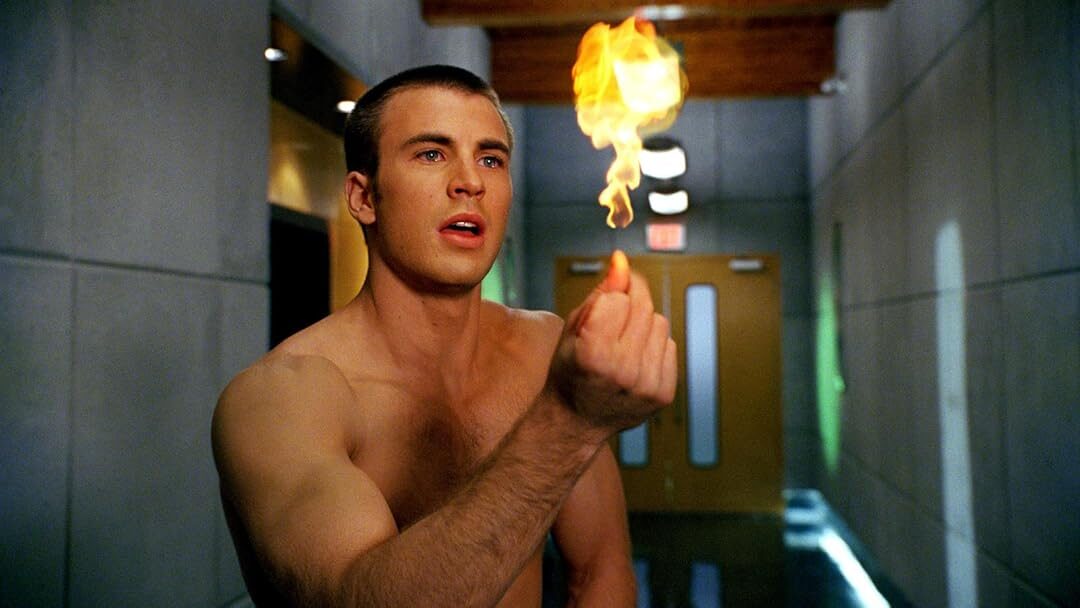
It begins as one would expect from superhero films involving high-concept science fiction, namely with a group of characters, including the villain, getting into some kind of mishap that alters their DNA. Such is the fate of five New Yorkers after exposure to electric-like radiation while aboard an ultra high-tech space station. Four of them become the title heroes: Brilliant but broke and overly analytical scientist Reed Richards (Ioan Gruffudd), who gains the ability to stretch; Richards’ best friend Ben Grimm (Michael Chiklis), who transforms into a hulking rock creature with super strength; Richards’ ex-girlfriend and genetic researcher Susan Storm (Jessica Alba), who can both generate force fields and become invisible; and Storm’s reckless kid brother Johnny (Chris Evans), who can fly and make his body generate fire. The fifth person is foreign tech billionaire Victor Von Doom (Julian McMahon), Richards’ arrogant rival in both life and love, Storm being the object of his selfish desire. With his skin transforming into metal, and with a name like Von Doom, is it any wonder he becomes the villain?
All this is followed, as it always is, by the characters struggling to acclimate to their new physical realities, regardless of their willingness to accept them. Grimm has the hardest time of it; setting aside the logistical challenges of everyday activities like holding onto eating utensils and drinking glasses, he’s ostracized because of his appearance. Indeed, after taking one look at him, his fiancée (Laurie Holden) runs off screaming; the next day, she removes her engagement ring and unceremoniously places it on the pavement in front of hundreds of people. The impetuous daredevil Johnny, on the other hand, joyfully embraces not just his pyrokinetic abilities but also the celebrity status it brings him. As for Richards and Storm, the former detrimentally labors over the details in the construction of a DNA repairing machine while the latter largely acts as a voice of reason to both her brother and her ex.
As for Von Doom, he’s initially dismayed by his own physical changes, because of course his handsome face is not just a symbol of his own vanity but also of his now failing company. However, he changes his tune when he sees the benefits organic metal skin can have, namely the ability to produce and direct powerful electric currents. This paves the way for his obligatory descent into madness and rage, which obviously involves revenge against the stockholders and bankers who withdrew their financial support. As the heroes, now dubbed the Fantastic Four, gain more positive attention, he also seeks to eliminate the competition, first by emotional divide-and-conquer manipulation, then through more traditional comic book methods that combine technology with superpowers.
This brings us to the climactic good-versus-evil battle in the middle of Manhattan, the go-to place for comic book battles outside the fictional cities of Metropolis and Gotham City. In most superhero films, the final act is where the stunts and special effects really shine, and Fantastic Four is no exception. Thankfully, director Tim Story tempers this cliche by not allowing the battle to wage for too long. In fact, under his direction, the film as a whole keeps one foot out of the same-old-same-old trap; rather than making it solely about the animosity between the Fantastic Four and Van Doom, its main focus is the Four navigating the ups and downs of their mutations and their newfound fame.
I haven’t said much about the casting and performances, perhaps because they have never been my primary concern when watching a comic book adaptation. I think it’s also because the actors are only as good as the film requires them to be. There clearly wasn’t much demand for things like nuance or complexity, not when they know they’re in something as intentionally escapist as a superhero movie. There is, however, some room for theatricality, and McMahon correctly takes this approach with Van Doom. He’s not too grounded, but he doesn’t chew the scenery, either; his performance rests in a gray zone between those extremes. The long and short of it is that Fantastic Four is nothing more or less than a fun comic book adaptation – a perfectly serviceable popcorn film for the summer season. You have only yourself to blame if you were expecting more.