Reviews
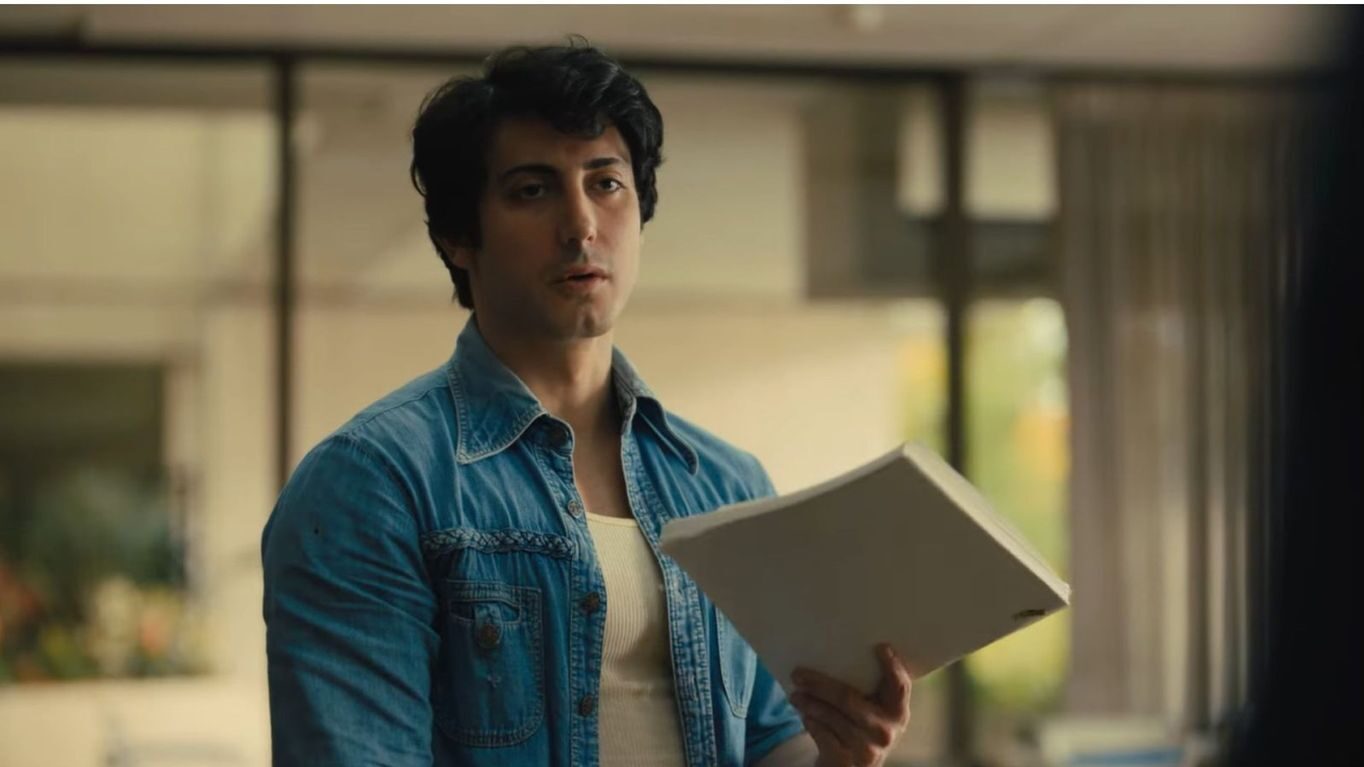
I Play Rocky
2026
.
PG-13
.
2h 8m
The appeal of Peter Farrelly’s I Play Rocky, a docudrama about the making of the 1976 Oscar-winning blockbuster Rocky, is that its subject is just as much of an underdog as Rocky Balboa. That would be the character’s creator, Sylvester Stallone, a nobody from New York City who wanted to be an actor. Though he managed to land a few small roles in his mid twenties, no one in showbiz seriously considered him for leading-man parts. Even with the stage name of Mike, he didn’t have the pretty face or the charming voice they wanted; both were permanently affected at birth, a difficult delivery and pairs of forceps severing nerves in his head. Broke, occasionally homeless, and once financially desperate enough to star in a softcore pornographic film, it seemed as if his big break would never come. Technically, it didn’t. With the encouragement of his photographer wife Sasha, he made his own break happen.
It was through Rocky. Stallone wrote the screenplay, reportedly in three days, and made it clear to interested producers Irwin Winkler and Robert Chartoff that he, and only he, be cast in the lead role. There were, of course, attempts to buy Stallone out, all on the part of Chartoff-Winkler Productions head Sandy Maddox, who saw no potential in Stallone or his script. The more Stallone stuck to his guns, the more money Maddox would offer. Anyone would be tempted after a while, and Stallone was no exception. It’s not as if he didn’t need the money; he had bills to pay and a pregnant wife to provide for. But his artistic integrity was strong, and ultimately, he couldn’t be bought. Winkler and Chartoff tolerated his inflexibility, albeit through grit teeth. Unlike Maddox, they saw the potential in Rocky, and in its writer.
I Play Rocky is a portrait of overcoming uphill battles, both personal and professional. We may know going into it that Rocky was made, released, lauded by critics and audiences, and awarded with three Oscars, including Best Picture. We also know that no one involved in its production foresaw success, so we’re drawn into Farrelly’s reenactment all the more. Like all docudramas and biopics, it has to a certain extent been dramatized; some scenes, especially a minor subplot with Stallone’s dog Butkus, are too well timed, too well acted, and too neatly resolved to be anything other than staged. It was more important that it stay true to Stallone’s dogged perseverance, which in turn would stay true to the spirit of Rocky. And stay true, it does. Indeed, I found myself rooting for Stallone the same way I rooted for his character. At times, it was hard to tell where the real man ended and the fake one began.
Movies like this require much of their actors, who essentially have to become celebrity impersonators without letting their performances sink to the level of caricature. Everyone in this film rises to the challenge. Topping that list is Anthony Ippolito. As was the case with Austin Butler as Elvis Presley, Renée Zellweger as Judy Garland, Charlize Theron as Aileen Wuornos, and Val Kilmer as Jim Morrison (to name just a few), Ippolito doesn’t play Sylvester Stallone so much as physically and vocally inhabit him. There’s not a trace of parody to be found. He even nails the recreated Rocky scenes, at which point he’s performing not just Stallone, but Stallone when he was performing. I can only imagine that an actor playing an actor when he’s acting, and doing it flawlessly, is about as difficult as it gets. I hope the Academy takes notice.
AnnaSophia Robb brings the right mixture of wisdom, empathy, and New York toughness to Sasha, and bases her performance on the notion that behind every great man is a great woman (despite her real-life divorce from Stallone in 1985). P.J. Byrne and Toby Kebbell are superb in their respective roles as Winkler and Cartoff. They expertly, and rather amusingly, depict the psychological toll of navigating the cutthroat world of 1970s Hollywood. Tracy Letts oozes delicious misanthropy as Sandy Maddox, a real negative Nelly who passed on The Godfather and has had a deep resentment of Paramount Pictures ever since. Jay Duplass – a director, writer, and producer in his own right – lends authenticity to the role of Rocky director John G. Avildsen, who was brusque and, when on location in Philadelphia, not above circumventing labor unions and local law enforcement. And Matt Dillion brings gravitas as Stallone’s generationally abusive father, a barber harboring regret over letting his own dreams go.
The reenactment scenes aren’t intended to work in the same way as scenes in docudramas like Ed Wood and The Disaster Artist, where the intention was to humorously depict the making of B movies that went on to become cult classics. Peter Farrelly – who, because of Green Book, is himself no stranger to the Academy – was tasked to remind audiences why Rocky took off in 1976 and remains beloved to this day. He did more than pull it off; he achieved a level of authenticity that was nothing short of uncanny. Of course, near-perfect recreations of movie scenes are only part of why I Play Rocky works so well. Just like with Rocky, it has the underdog factor, and it allows the audience the satisfaction of seeing a down-and-out everyman beat the odds and live his dream. Note: Sit through the end credits. Farrelly includes archival footage you won’t want to miss.

 C. R. Pandolfi